
An air conditioner that ices over in the middle of a Rochester summer looks like a serious mechanical failure. In most cases it is not. Freezing is a symptom with a small number of well-defined causes, and two of them are within a homeowner’s control.
What matters is the sequence. A frozen coil that is thawed and put straight back into service will freeze again, usually within a day, and each cycle adds wear to the compressor. Identifying why it froze before restarting the system is the difference between a filter change and a compressor replacement.
This guide covers what causes the ice, how to thaw the system safely, how to establish whether the cause is airflow or refrigerant, and what the repairs cost in this area.
From Darren, the owner
Every summer somebody tells me their system froze, they let it thaw overnight, and it froze again the next afternoon. That second freeze is the useful information. A one-off is usually a dirty filter. A repeat means airflow or charge, and running it in that state is what damages compressors.
Shut the System Down Before Anything Else
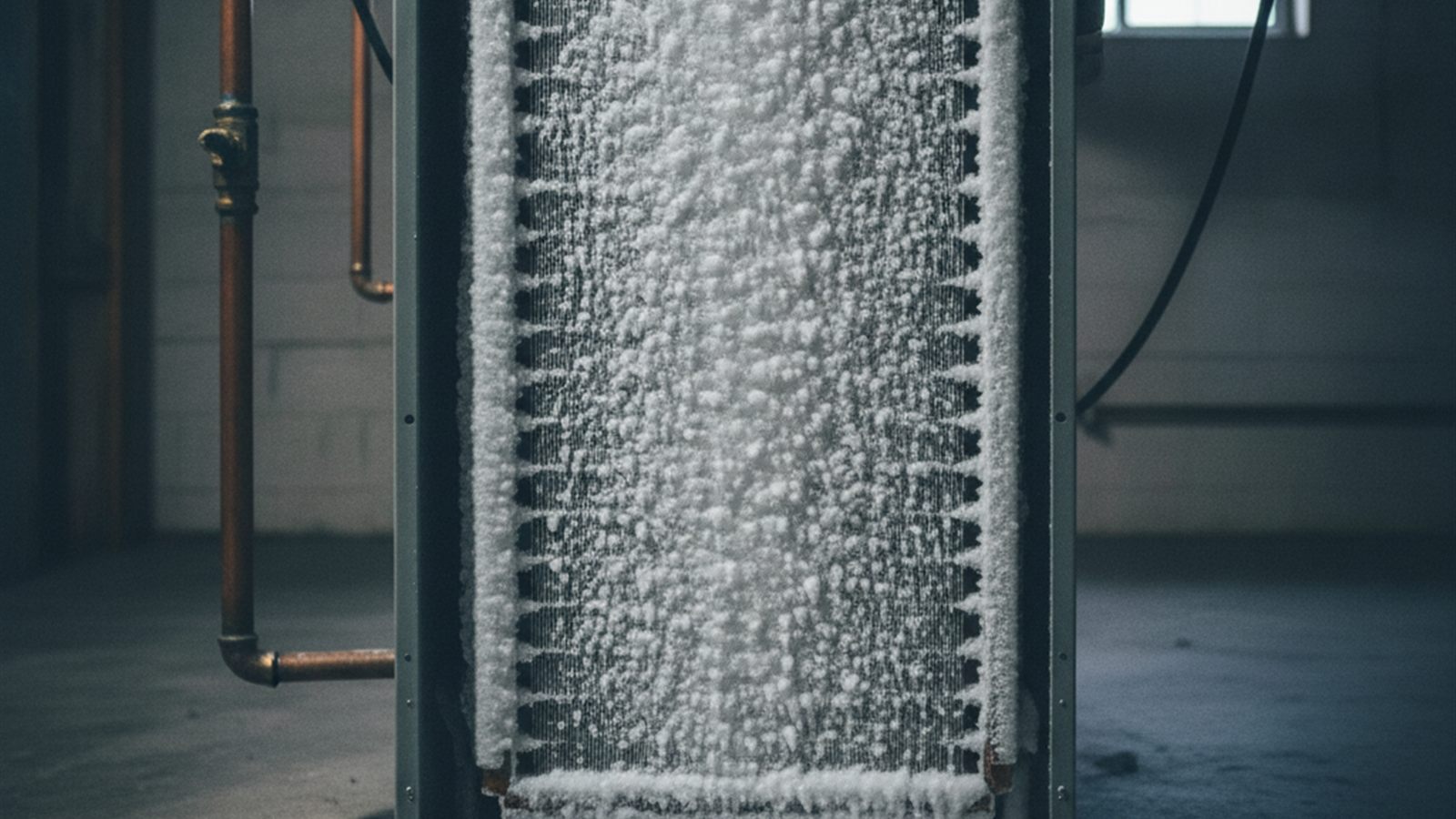
Set the thermostat to OFF and the fan to ON. This combination matters. Switching cooling off stops further ice forming; leaving the blower running circulates room-temperature air across the coil and thaws it substantially faster than shutting the system down entirely.
Continuing to run a frozen system carries a specific risk. When the coil is blocked with ice, refrigerant that should have evaporated returns to the compressor as liquid. Compressors are designed to compress vapour, not liquid, and repeated liquid return is a recognised cause of premature compressor failure. This is the mechanism that turns an inexpensive fault into the most expensive repair on the system.
Immediate steps
- Thermostat to OFF, fan to ON
- Place towels or a tray beneath the indoor unit, since thawing ice becomes several gallons of water
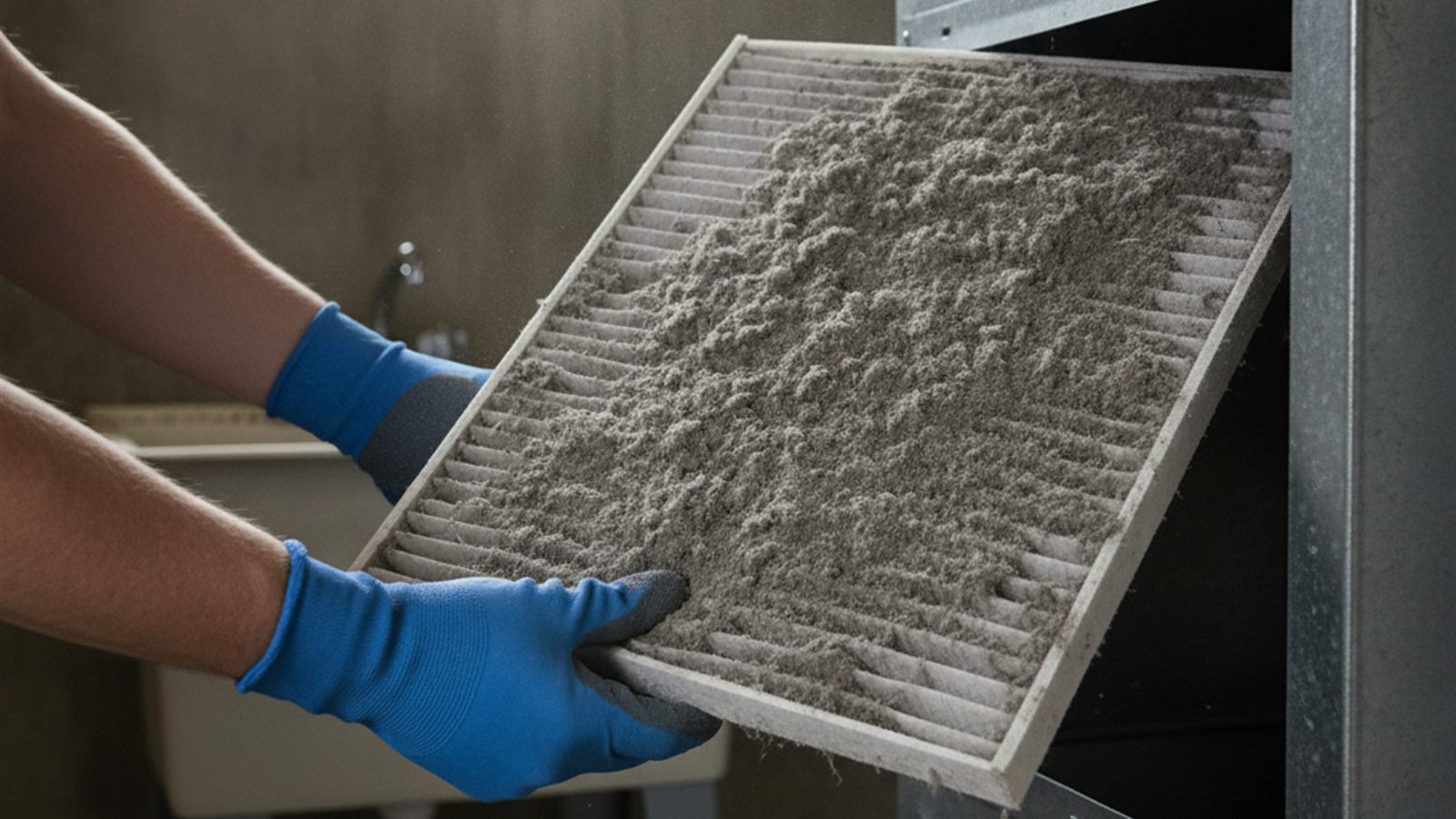
- Check the air filter while the system thaws
- Note whether the ice was on the indoor coil, the outdoor lines, or both. It narrows the diagnosis considerably
Why a Cooling System Ices Over
The evaporator coil operates below room temperature by design. Refrigerant enters it as a low-pressure liquid, absorbs heat from air passing across the fins, and leaves as a vapour. Under normal conditions the coil surface sits at roughly 40 to 45 degrees Fahrenheit, which is cold enough to condense moisture out of the air but comfortably above freezing.
Ice forms when that surface drops below 32 degrees. There are only two ways this happens. Either not enough warm air is reaching the coil to keep it above freezing, or there is not enough refrigerant in the circuit to maintain the correct pressure.
That distinction drives everything that follows. Airflow faults are largely homeowner-serviceable. Refrigerant faults are not, and they indicate a leak, because refrigerant is not consumed during normal operation.
Identifying the Cause From the Evidence
The table below covers the causes that account for effectively all residential coil freezing, ranked by how often we encounter them.
| Cause | How it presents | Category | Homeowner or technician |
|---|---|---|---|
| Restricted air filter | Weak airflow at every register, filter visibly grey | Airflow | Homeowner |
| Closed, blocked or leaking ducts | Some rooms weak, others normal | Airflow | Both |
| Dirty evaporator coil | Gradual decline in cooling over several seasons | Airflow | Technician |
| Failing blower motor or wheel | Audible change in blower note, very low airflow | Airflow | Technician |
| Low refrigerant charge | Frost starts at the outdoor service valve and travels inward | Refrigerant | Technician |
| Running in cool weather | Occurs below roughly 60F outdoor temperature | Operating condition | Homeowner |
The last row is worth a note in this climate. Rochester evenings in June and September can drop into the fifties, and running cooling at those outdoor temperatures lowers coil pressure far enough to freeze a perfectly healthy system. If the freezing only happens overnight and the system behaves normally during the day, the outdoor temperature is a likely explanation rather than a fault.
Distinguishing airflow from refrigerant
- Airflow fault: ice concentrated on the indoor coil, airflow at the registers noticeably weak, filter dirty or coil visibly dusty
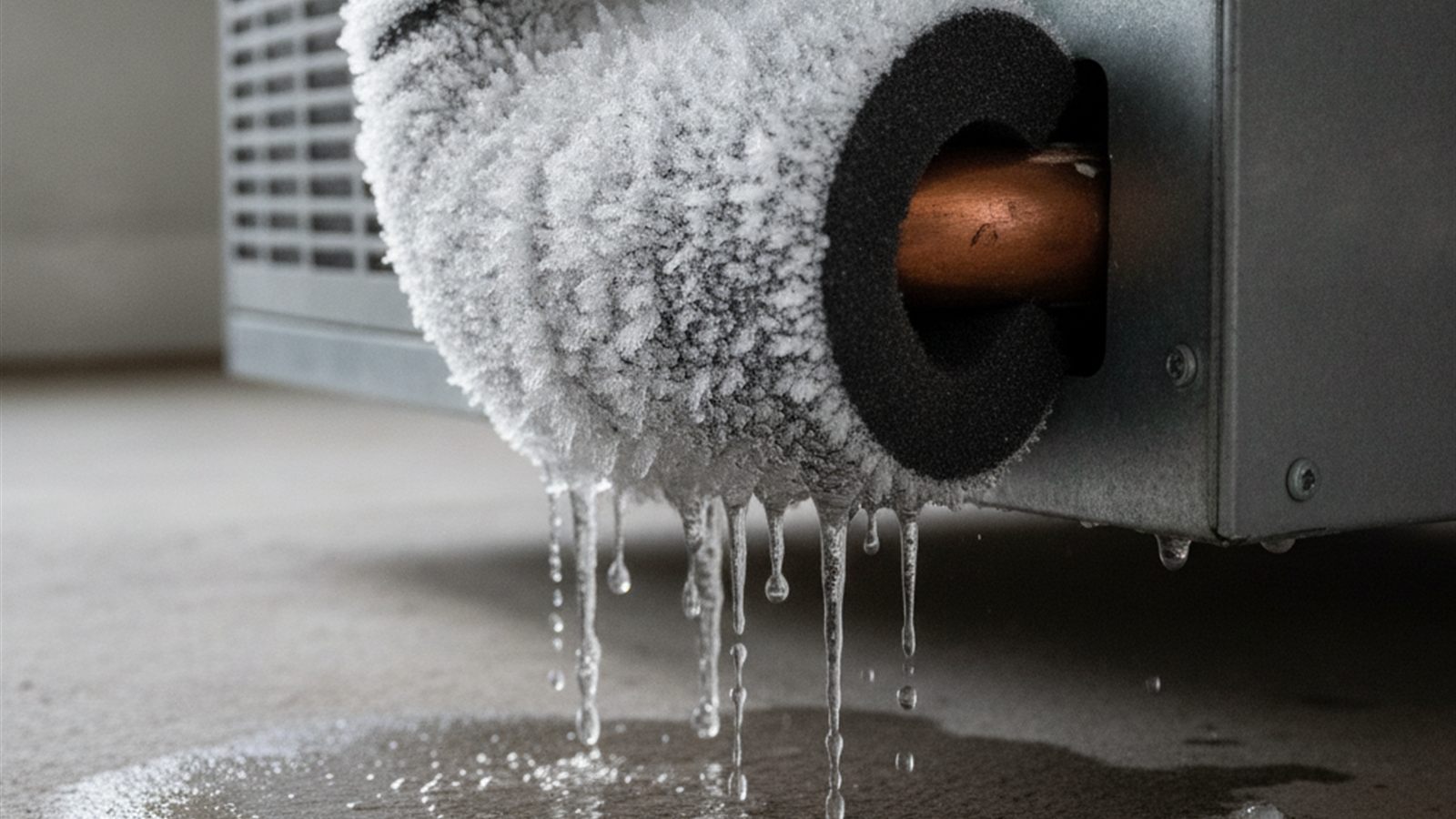
- Refrigerant fault: frost beginning at the outdoor unit service valve and tracking back along the line set, airflow at the registers normal
- Either: the system runs continuously without reaching the set temperature
Thawing the System Safely
Thawing procedure
- Set cooling to OFF and the fan to ON at the thermostat.
- Allow one to three hours for a light freeze. A coil iced solid can take eight hours or longer.
- Position towels or a shallow tray to catch meltwater. A heavily iced coil holds several gallons.
- Replace the air filter during the thaw, regardless of how it looks.
- Open every supply register in the house and confirm nothing is blocking the return.
- Once no ice remains anywhere on the coil or the line set, restore cooling and observe the system for the next 24 hours.
Two things should not be attempted. Do not chip or scrape at the ice, because evaporator fins deform under very little force and a punctured coil converts a service call into a coil replacement. Do not apply direct heat from a heat gun or hairdryer, since uneven heating stresses the joints.
When the System Keeps Freezing
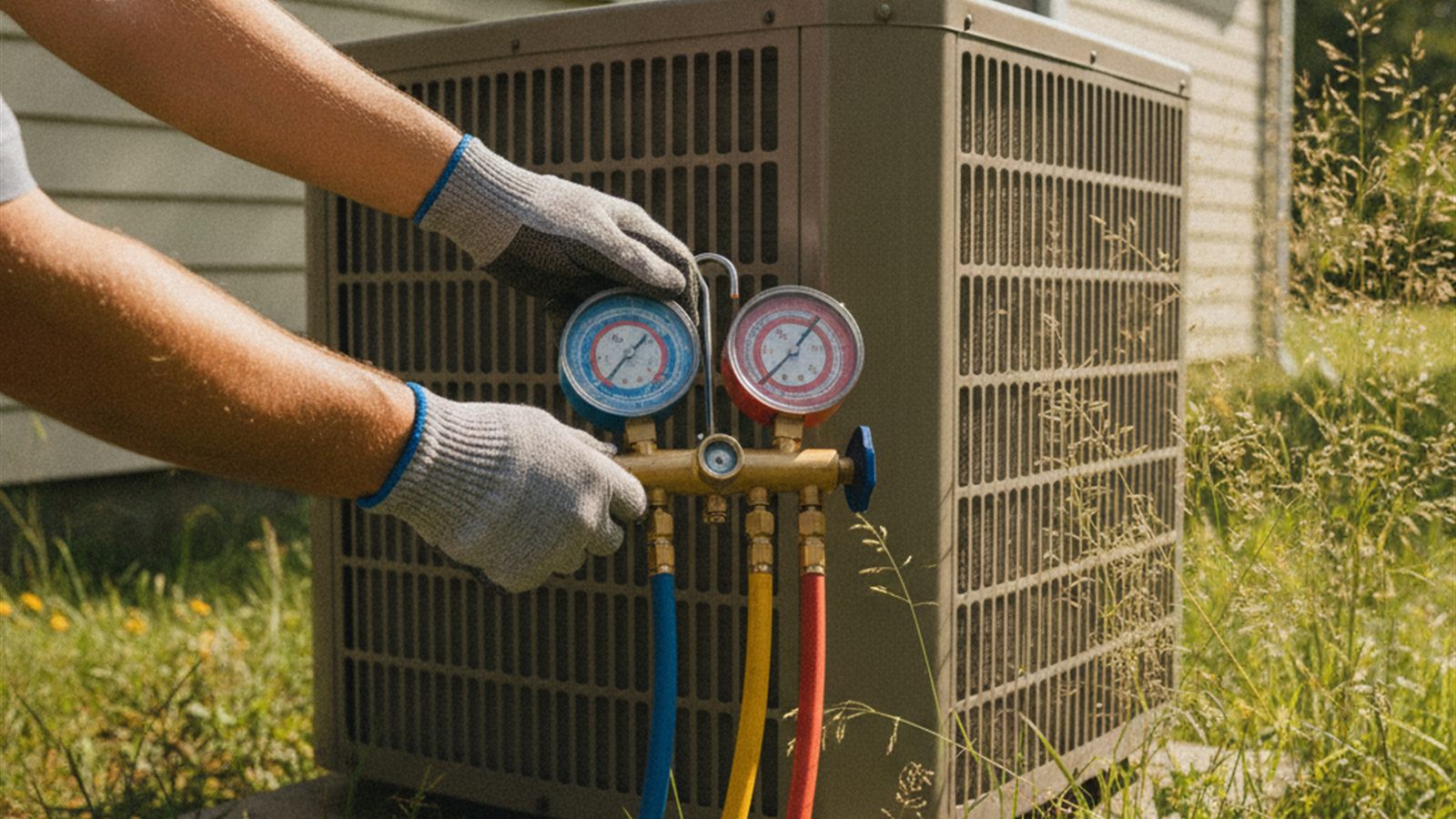
A system that freezes again within a day of thawing, with a new filter fitted and registers open, has a cause that will not resolve on its own. At that point the diagnosis narrows to three possibilities.
| Remaining cause | Why it persists | What resolving it involves |
|---|---|---|
| Refrigerant leak | Charge continues to fall, so pressure and coil temperature keep dropping | Electronic leak detection, repair, evacuate and recharge to the plated weight |
| Fouled evaporator coil | Dust bonded to the fins insulates them and restricts airflow between them | Chemical coil clean, often requiring partial removal of the coil |
| Blower or duct restriction | The system cannot move its rated airflow regardless of filter condition | Static pressure testing, blower service, duct correction |
The refrigerant case deserves emphasis. Adding refrigerant without locating the leak restores cooling temporarily and guarantees a repeat visit, usually within the same season and with additional compressor wear accumulated. Any quotation that proposes a recharge without a leak search is treating the symptom. Where the system is also failing to hold temperature between freezes, the diagnostic path overlaps with the one set out in our guide to an air conditioner that runs without cooling.
Airflow Faults Worth Checking Yourself
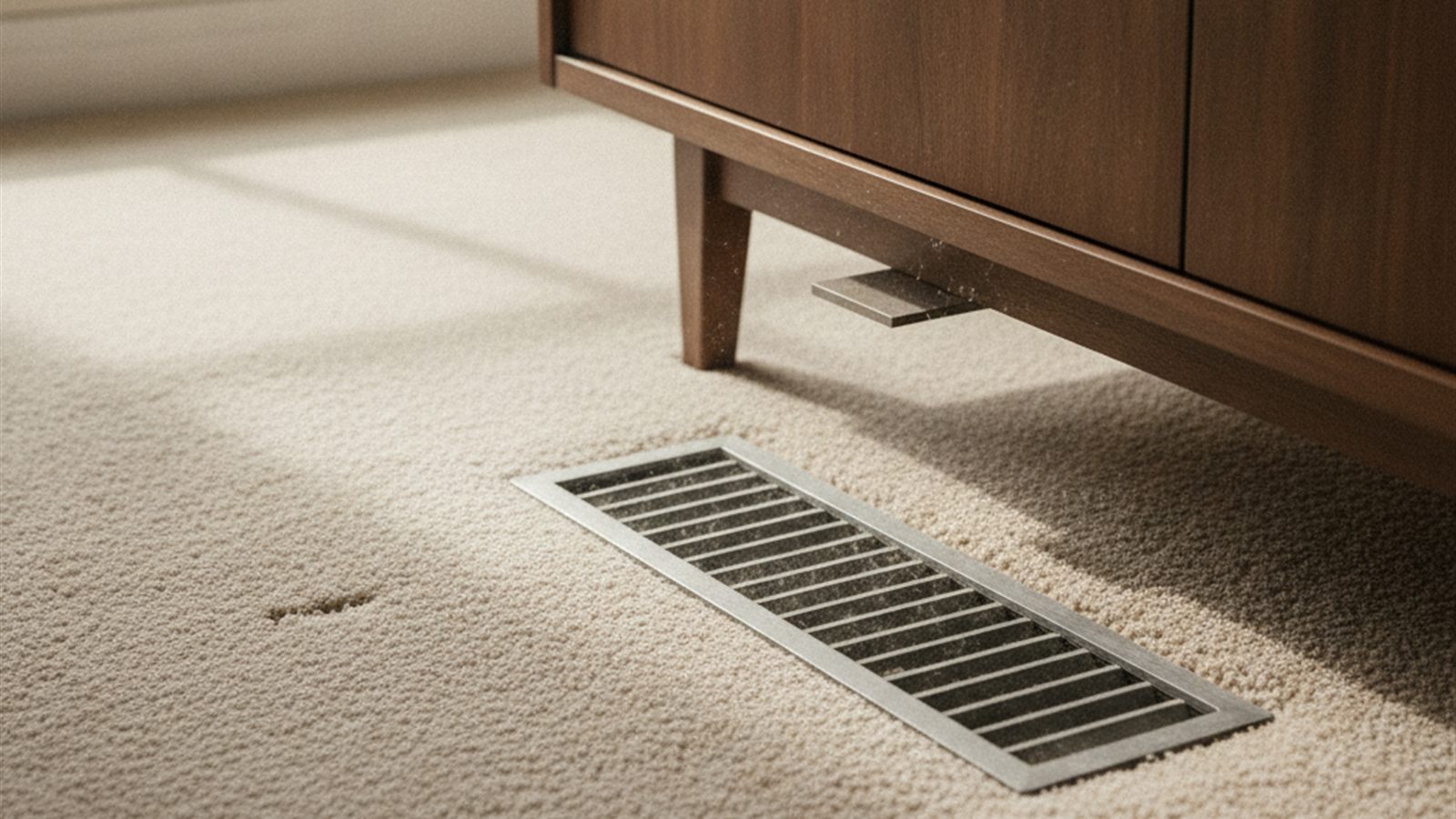
Airflow restriction is the largest single category of cause, and several contributors are visible without tools.
Checks a homeowner can complete
- Filter condition and, importantly, filter rating. A very high MERV filter fitted to a system not designed for it restricts airflow enough to freeze the coil
- Every supply register open, including in unused rooms
- Return grilles clear of furniture, rugs and stored items
- Basement or attic duct runs intact, with no disconnected sections or crushed flexible duct
- Outdoor condenser clear of leaves, grass clippings and shrub growth to at least two feet on all sides
The filter rating point catches people out regularly. Upgrading to a dense high-MERV filter improves filtration but raises resistance across the system. On older equipment with limited blower capacity, that alone can be enough to drop the coil below freezing. Closed registers work the same way, which is why closing vents in unused rooms rarely saves what people expect it to.
Coil cleaning and duct inspection form part of an annual AC tune-up, which is why systems on a maintenance schedule account for a small share of the freezing calls we attend, particularly in the older homes around Fairport and Penfield where original ductwork is still in service.
Frozen Outdoor Units and Window Air Conditioners
Ice in other locations has different causes and different urgency.
| Where the ice appears | Most likely cause | Action |
|---|---|---|
| Indoor evaporator coil | Airflow restriction or low refrigerant | Thaw, replace filter, observe for repeat |
| Copper line set, spreading from the outdoor valve | Low refrigerant charge | Technician, leak search required |
| Outdoor unit in cooling season | Low charge or a failing metering device | Technician |
| Outdoor unit in winter on a heat pump | Normal defrost cycle, or a failed defrost board if persistent | Monitor, call if ice remains after a defrost cycle |
| Window unit | Dirty filter, low outdoor temperature, or restricted airflow | Clean filter, run on fan only to thaw |
The heat pump row is the one most often misread. A heat pump running in winter is designed to accumulate frost and clear it on a scheduled defrost cycle, so ice on the outdoor unit in January is usually normal operation. It becomes a fault when the ice remains after a full defrost cycle has run, or when it builds into a solid block around the base.
Repair Costs in the Rochester Area
Pricing depends on the cause and the equipment, and the cost is confirmed before work begins. These ranges are typical locally.
| Work required | Typical Rochester cost | Frequency |
|---|---|---|
| Diagnostic visit, credited against the repair | $95 – $175 | Every call |
| Air filter replacement during a visit | $15 – $45 | Very common |
| Chemical evaporator coil clean | $300 – $700 | Common |
| Blower motor replacement | $450 – $1,100 | Occasional |
| Refrigerant leak location and repair | $300 – $1,500 | Common on older systems |
| Evaporator coil replacement | $900 – $2,800 | Least common |
The distribution is worth noting. A large share of freezing calls resolve at the filter, and most of the remainder at a coil clean. Where a system is quoted for replacement on the strength of a single freeze, that warrants a second opinion, and the elimination sequence behind our AC repair pricing in Rochester, NY follows the same order used above.
When the System Needs a Technician
Stop and call if any of the following apply
- The coil re-freezes within 24 hours of a full thaw with a new filter fitted
- Frost begins at the outdoor unit rather than the indoor coil
- Airflow at the registers is normal but the coil still freezes
- The system runs continuously without reaching the set temperature
- There is a hissing or bubbling sound near the indoor coil, which can indicate a refrigerant leak
- The outdoor unit has iced in cooling season
We cover Victor, Pittsford, Fairport, Penfield, Honeoye Falls, Canandaigua, Farmington, Mendon, Brighton, Chili and Churchville, and carry filters, capacitors and common blower components on the vehicles.
“Tech was able to come out much faster than anyone else during a hot spell. He was here less than an hour and was able to fix air conditioning. He explained the problem and was very knowledgeable. They were very reasonable compared to the last company I had used.”
Cindy Mahoney ★★★★★
Google review, AC repair during a heat wave
System Freezing Again After Thawing?
A repeat freeze means airflow or refrigerant, and neither resolves on its own. Tell us what you are seeing and we will establish which it is. Emergency cover runs 24/7 through the cooling season.
Family-owned Rochester HVAC since 1989, free over the phone, free in-home proposals, no upsell.
Frequently Asked Questions
Select a question to view the answer
What causes AC coils to freeze?
Only two conditions produce it. Either insufficient warm air is reaching the coil to keep its surface above freezing, or the refrigerant charge is low enough that coil pressure and temperature fall below 32 degrees. Airflow causes include a restricted filter, closed registers, a dirty coil or a failing blower. Refrigerant causes always indicate a leak, since refrigerant is not consumed in normal operation.
How long does a frozen AC take to thaw?
One to three hours for a light freeze with the fan running, and up to eight hours or more where the coil has iced solid. Setting the thermostat to OFF with the fan to ON is considerably faster than shutting the system down completely, because circulating room-temperature air across the coil accelerates the thaw.
Can I pour hot water on a frozen AC unit?
It is not advisable on an indoor evaporator coil. The water has nowhere controlled to drain, so it overwhelms the condensate pan and reaches the electrical section of the air handler. Uneven heating also stresses the joints. Running the blower is slower but carries no risk. On an outdoor unit, lukewarm water is occasionally used by technicians, but it does not address the underlying cause.
Why does my AC keep freezing up after I thaw it?
A repeat freeze within 24 hours, with a new filter fitted and registers open, indicates one of three faults: a refrigerant leak, an evaporator coil fouled enough to restrict airflow between the fins, or a blower and duct system unable to move the rated airflow. All three require diagnosis with instruments rather than further thawing.
Is it dangerous to run an AC that is frozen?
It is not a safety hazard to occupants, but it damages equipment. With the coil blocked by ice, refrigerant returns to the compressor as liquid rather than vapour. Compressors are not designed for that, and repeated liquid return is a recognised cause of premature failure. It is the mechanism that turns a filter-level problem into a compressor replacement.
Can running the AC on a cool night cause it to freeze?
Yes, and it is a common explanation locally. Below roughly 60 degrees outdoor temperature, coil pressure falls far enough to freeze a system in good condition. Rochester evenings in June and September regularly reach that range. Where freezing happens overnight but the system performs normally by day, outdoor temperature is a likelier explanation than a fault.
Dalton Heating & Cooling
1556 Brace Rd, Victor, NY 14564
Office hours: Mon to Fri, 8:00 AM to 4:30 PM
Emergency service: 24/7 by phone