From Darren, the owner
Before you reset anything, look through the small window on the furnace door and count the blinks on the status light. That flash code tells our technician which safety switch shut the furnace down, and it is erased the moment the power is turned off and on. Write it down first, then call.
A furnace blowing cold air is one of the most common heating problems in Rochester, NY, and in most cases it does not mean the furnace has failed. The blower is running, which tells us the furnace has power and the thermostat is calling, but the burners are either not lighting or are being shut off by a safety control. Identifying which of those is happening narrows the cause to a short list, and several items on that list can be checked by a homeowner in a few minutes.
The same logic applies when a furnace is not turning on at all, or when it starts, runs briefly and shuts off again. Each symptom points to a different group of components. Dalton Heating & Cooling has diagnosed these faults across Greater Rochester since 1989, and when a fault needs a technician, our furnace repair team in Rochester carries the parts that resolve most of them on the first visit.
Why Is My Furnace Blowing Cold Air Instead of Heat?
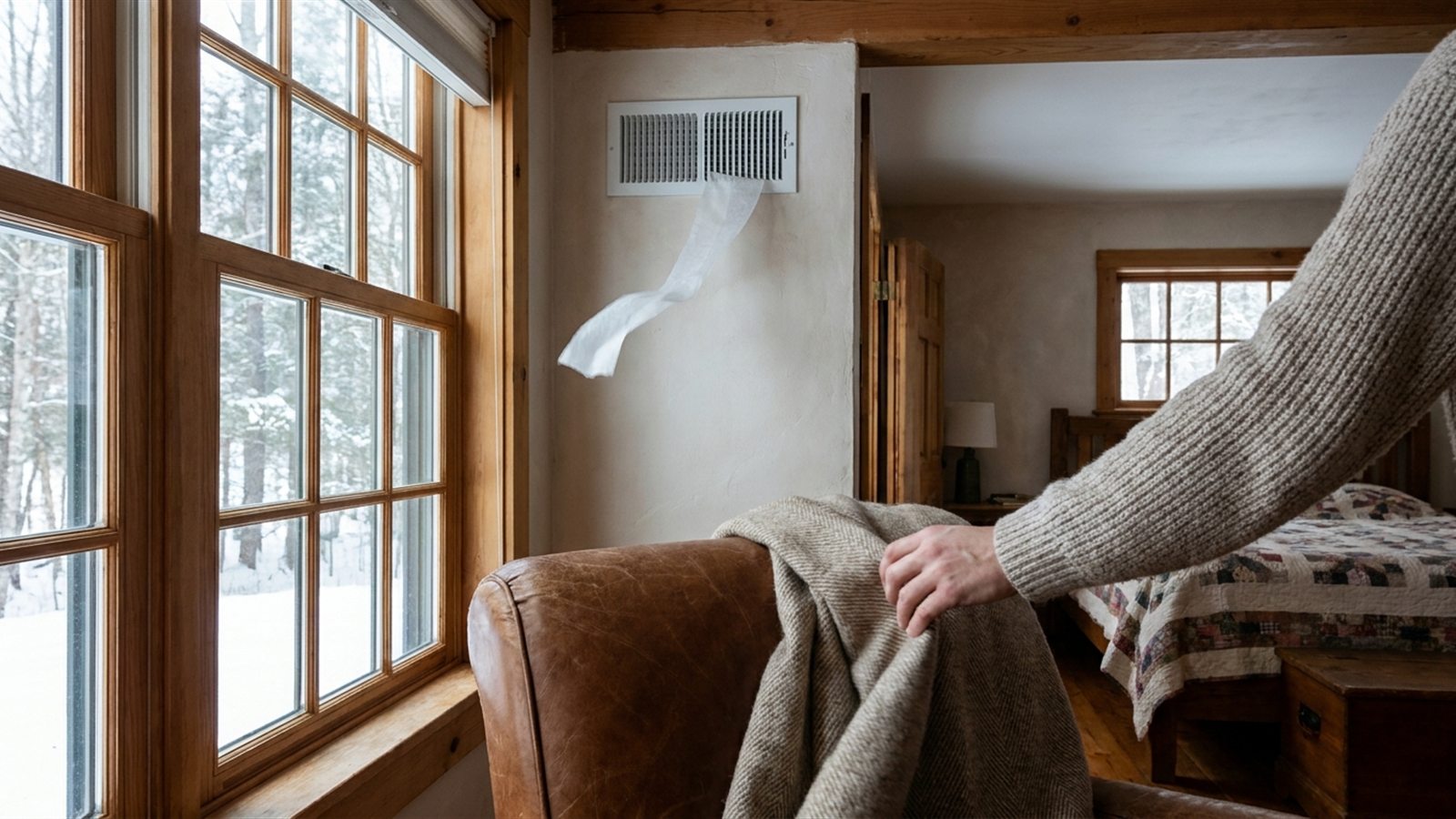
A gas furnace heats air in two stages. First the burners light and warm the heat exchanger; then, after a short delay, the blower starts and pushes household air across the hot metal and out through the ducts. When a furnace is blowing cold air, the blower is doing its job but the first stage is missing. Either the burners never lit, or they lit and were shut down by a sensor before the air had time to warm.
A brief burst of cool air at the start of a cycle is normal. The ductwork in an unheated basement or crawlspace sits at the temperature of that space, and the first air through it carries that chill until the heat exchanger catches up, usually within a minute or two. Cold air that continues for five minutes or more, or that arrives after a period of warm air, indicates a fault.
Homes with a heat pump paired to a gas furnace behave differently. A heat pump delivers air at around 90 to 100 degrees, which can feel cool against the hand compared with a furnace, and during a defrost cycle it may briefly circulate cooler air. If the system runs normally and the house holds temperature, that is expected operation rather than a fault.
What Should You Check First When Your Furnace Is Blowing Cold Air?
Five checks account for a large share of the cold-air calls we receive, and none of them requires tools or opening the furnace. Working through them in order takes less than ten minutes and either resolves the problem or gives a technician useful information before the visit.
Five checks in order
- Thermostat mode and fan setting. It should read HEAT, with the fan on AUTO. A fan set to ON runs the blower continuously, including between heating cycles, which delivers room-temperature air.
- Thermostat batteries and set point. Weak batteries cause erratic calls for heat. The set point must be above the current room temperature.
- Air filter. A clogged filter overheats the heat exchanger, and the furnace shuts its burners down while the blower keeps running to cool it.
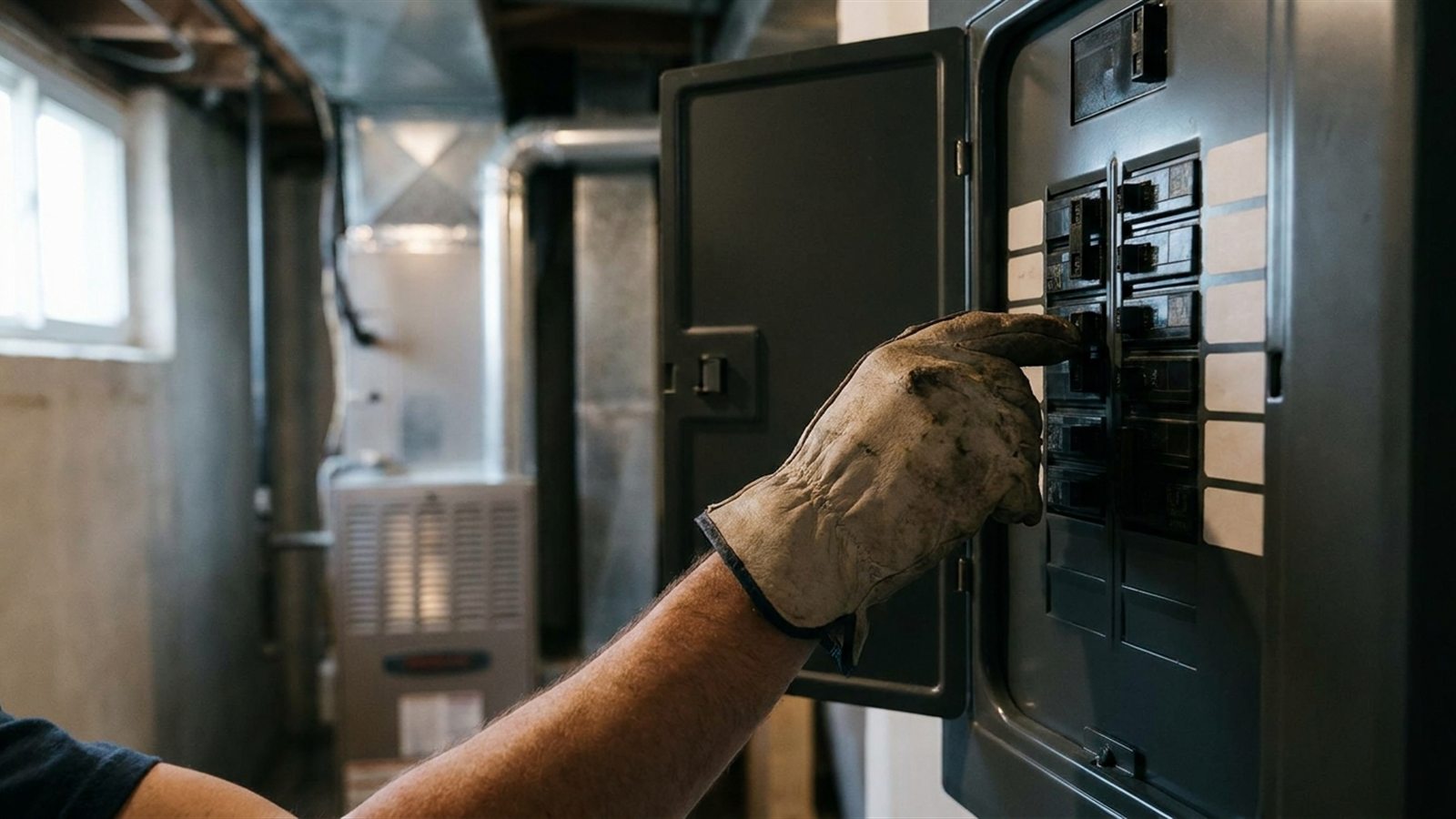
- Furnace switch and breaker. The service switch near the furnace looks like a light switch and is easily turned off by mistake. Check the breaker as well.
- Gas supply. Confirm other gas appliances are working and that the shut-off valve on the furnace gas line runs parallel with the pipe.
The fan setting deserves particular attention because it is the cause most often mistaken for a fault. Many homeowners switch the fan to ON in summer for air circulation and forget to return it to AUTO. In heating season, that setting keeps the blower running after the burners shut off, and the result is a steady stream of air at room temperature that feels cold against the skin. Smart thermostats with circulation modes produce the same effect, and the settings are worth reviewing on any recently installed model, including those fitted through our smart thermostat installation service.
If all five checks are in order and the furnace is still blowing cold air, the cause is inside the furnace. Turning the system off at the thermostat at that point prevents further cycling against a fault, and noting the status light code before doing anything else will shorten the diagnosis considerably.
Which Causes of a Gas Furnace Blowing Cold Air Need a Technician?
Once the simple checks are ruled out, a gas furnace blowing cold air usually traces back to one of the components that light the burners or confirm that the flame is present. The pattern of the symptom is the best guide to which one, and the table matches the most common patterns with their likely cause.
| What you notice | Likely cause | Homeowner or technician |
|---|---|---|
| Burners light for a few seconds, then go out; blower then runs cold | Dirty or failing flame sensor | Technician |
| Clicking or a glow at start-up but no flame | Failed ignitor or gas valve not opening | Technician |
| Inducer fan runs, then the furnace stops with no ignition | Pressure switch or blocked venting | Both |
| Warm air for several minutes, then cold air for the rest of the cycle | Overheating from a clogged filter, tripping the high limit | Homeowner first |
| Cold air from some registers, warm air from others | Leaking or disconnected ductwork | Technician |
| Older furnace with a standing pilot that keeps going out | Dirty pilot or failing thermocouple | Technician |
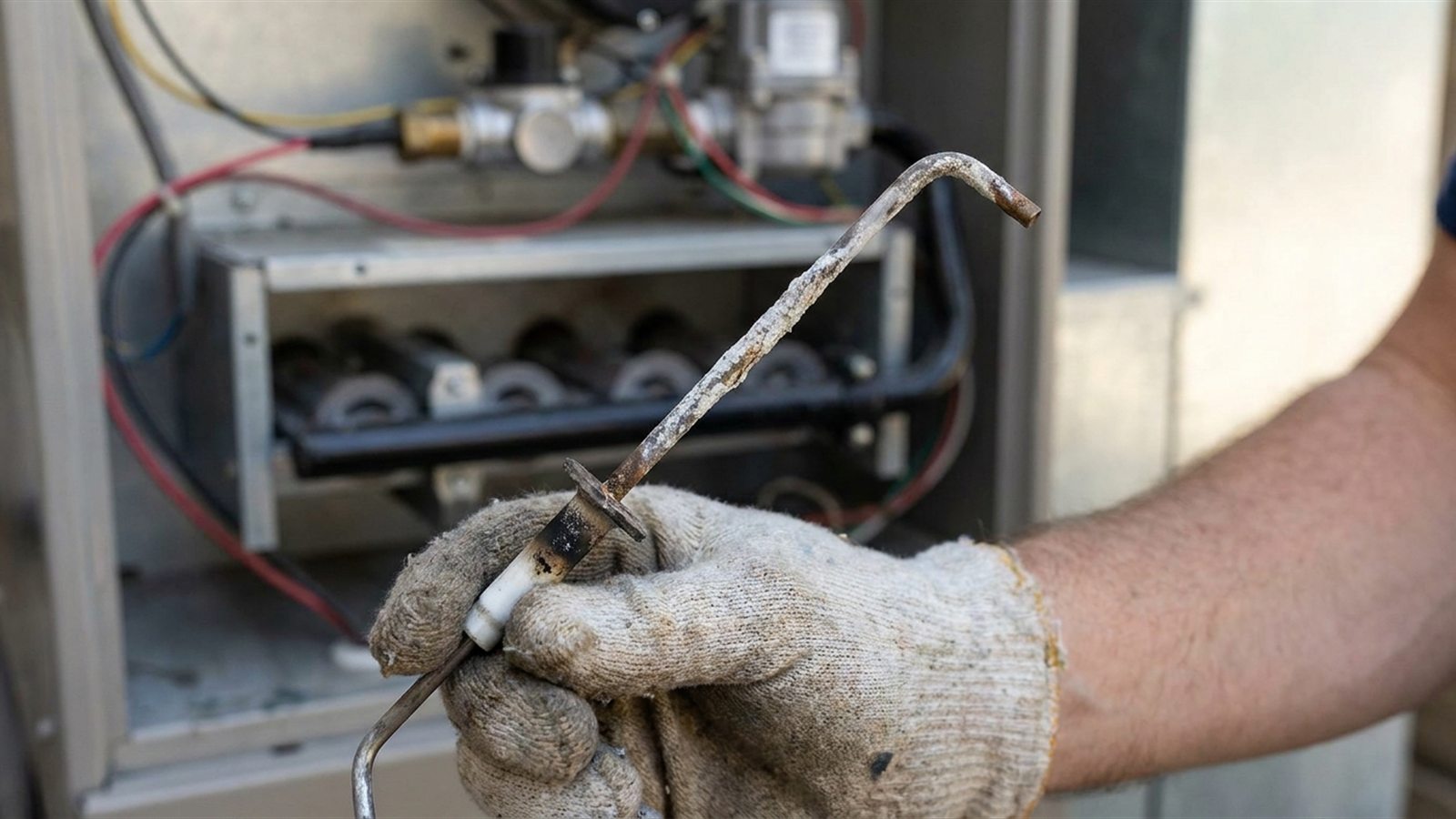
The flame sensor sits at the top of that list for a reason. It is a thin metal rod positioned in the burner flame, and its job is to prove to the control board that gas is burning. Over a season, a film of oxidation builds up on the rod and weakens the signal. The board reads the weak signal as a missing flame, closes the gas valve within seconds and lets the blower run to clear the heat exchanger. To the homeowner, it looks like a furnace that lights and then blows cold air.
Cleaning or replacing a flame sensor is a routine repair, but it is not a job for a homeowner. The sensor sits beside the gas burners and the ignitor, both of which are easily damaged, and a sensor that keeps fouling often points to a combustion or grounding problem that needs testing. Ductwork faults are similar: a disconnected run in a crawlspace or attic can send heated air into an unconditioned space while the rooms on that run receive cold air, and confirming it usually means inspecting duct joints that are out of sight.
Why Is My Furnace Not Turning On at All?
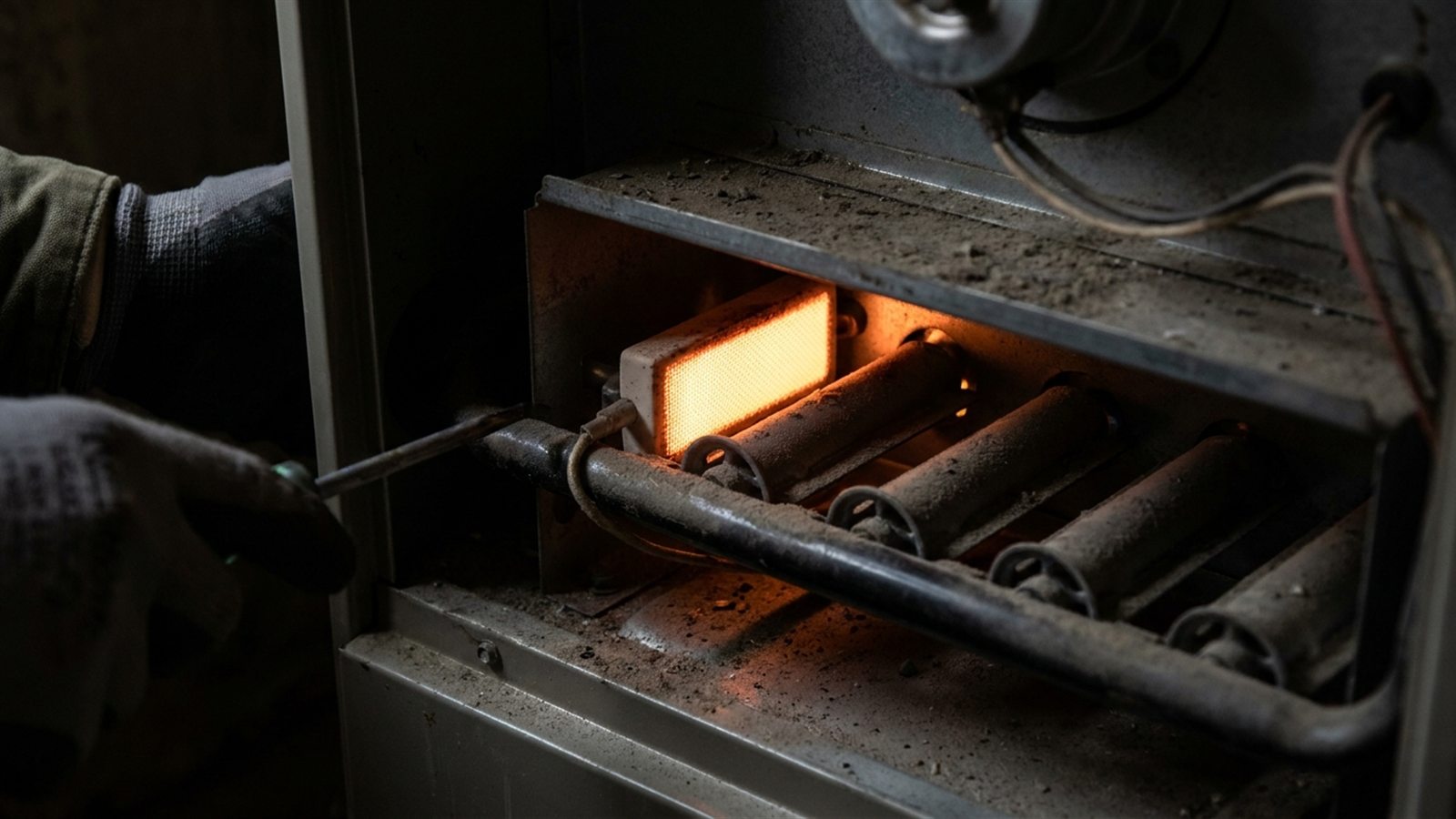
A furnace not turning on is a different fault from a furnace blowing cold air. When nothing happens at all, with no inducer fan, no click and no blower, the furnace is either not receiving power or not receiving a call for heat. That points first at the thermostat, the wiring between thermostat and furnace, the service switch, the breaker and the door safety switch, which cuts power whenever the blower compartment door is not seated properly.
When the furnace does start its sequence but stops partway, the cause sits further along. The sequence on a modern gas furnace is consistent: the inducer fan starts, the pressure switch confirms the venting is clear, the ignitor heats, the gas valve opens, the flame is proven and the blower follows. A technician uses the point at which the sequence stops, together with the status light code, to identify the failed component. Hot surface ignitors are a frequent culprit on furnaces over ten years old, because they are made of a brittle ceramic that cracks with age.
When the furnace is not turning on, note the following
- Whether the thermostat display is lit, and what mode it shows
- Whether you hear the inducer fan, a click or a hum when heat is called
- Whether the ignitor glows orange through the viewing gap
- The status light pattern on the control board, and how many flashes it repeats
- Whether the problem started after a power outage, a storm or recent work in the basement
Power outages are worth singling out in this region. Ice storms and high winds regularly cut power across Monroe County, and a furnace that does not restart once power returns has often been caught by a voltage surge or by a control board that needs its power cycled once. A single power cycle at the service switch is reasonable after an outage; repeated attempts are not, for the reasons covered under the reset button section.
“Furnace quit on one of the coldest days of winter. Dalton was there within a couple hours and got the furnace running smoothly again. Always great service!”
Susan Boyd ★★★★★
Google review, emergency furnace repair · See more on Google
What Causes Furnace Short Cycling, and How Is It Fixed?
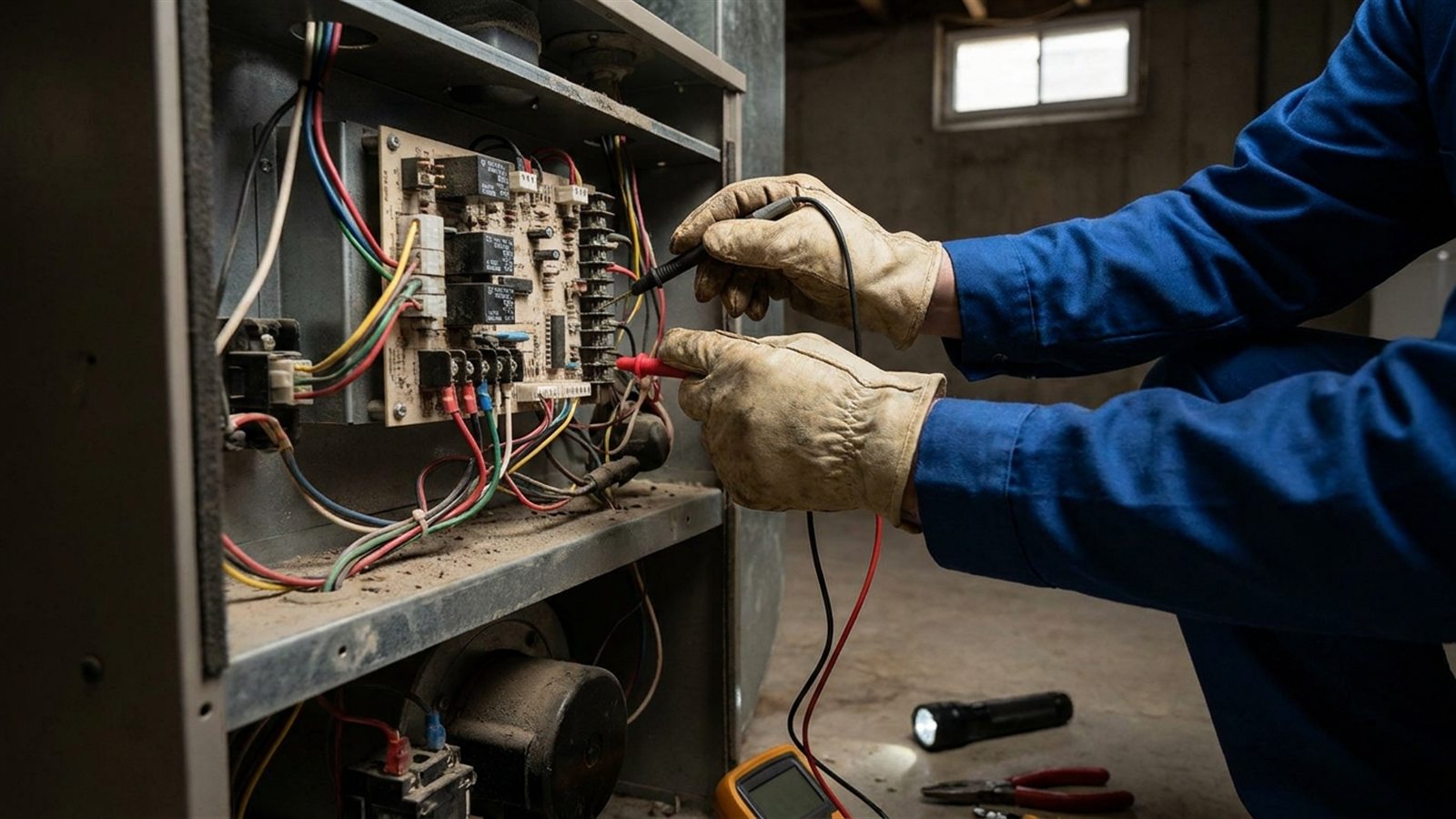
Furnace short cycling describes a furnace that starts, runs for a few minutes and shuts off before the house reaches the set temperature, then repeats the pattern. A normal heating cycle in a Rochester winter lasts somewhere between ten and fifteen minutes, longer on the coldest days. Cycles of three to five minutes, repeating several times an hour, indicate that something is ending the cycle early.
| Cause of short cycling | How it shows up | Typical fix |
|---|---|---|
| Overheating from restricted airflow | Hot air for a few minutes, then burners off, blower keeps running | Filter replacement, open registers, blower cleaning |
| Weak flame signal | Burners light and shut off within seconds, then retry | Flame sensor cleaning or replacement |
| Thermostat location or fault | Short cycles regardless of outdoor temperature | Relocate away from heat sources, recalibrate or replace |
| Oversized furnace | House heats quickly, then cools, with frequent restarts | Adjust blower and staging; resize at replacement |
| Venting or pressure switch fault | Inducer runs, furnace stops before or shortly after ignition | Clear venting, test or replace pressure switch |
Short cycling is not an immediate safety hazard in most cases, but it is hard on the equipment. Every start puts stress on the ignitor, the inducer motor and the heat exchanger, and a furnace that starts three times as often as it should wears those parts out at a corresponding rate. Overheating is the case to take most seriously, because repeated high-limit trips are a sign that the heat exchanger is running hotter than it was designed to.
Oversizing is the cause homeowners are least likely to suspect. A furnace with more capacity than the house needs heats the space so quickly that the thermostat is satisfied before the heat exchanger reaches a stable temperature. It is common in homes where the furnace was sized by rule of thumb rather than by a load calculation, and in homes that have since had new windows or insulation installed. Adjustments to blower speed and staging can help, but the permanent fix is a correctly sized furnace when the current one reaches replacement age.
Why Does a Furnace Keep Shutting Off During a Rochester Winter?
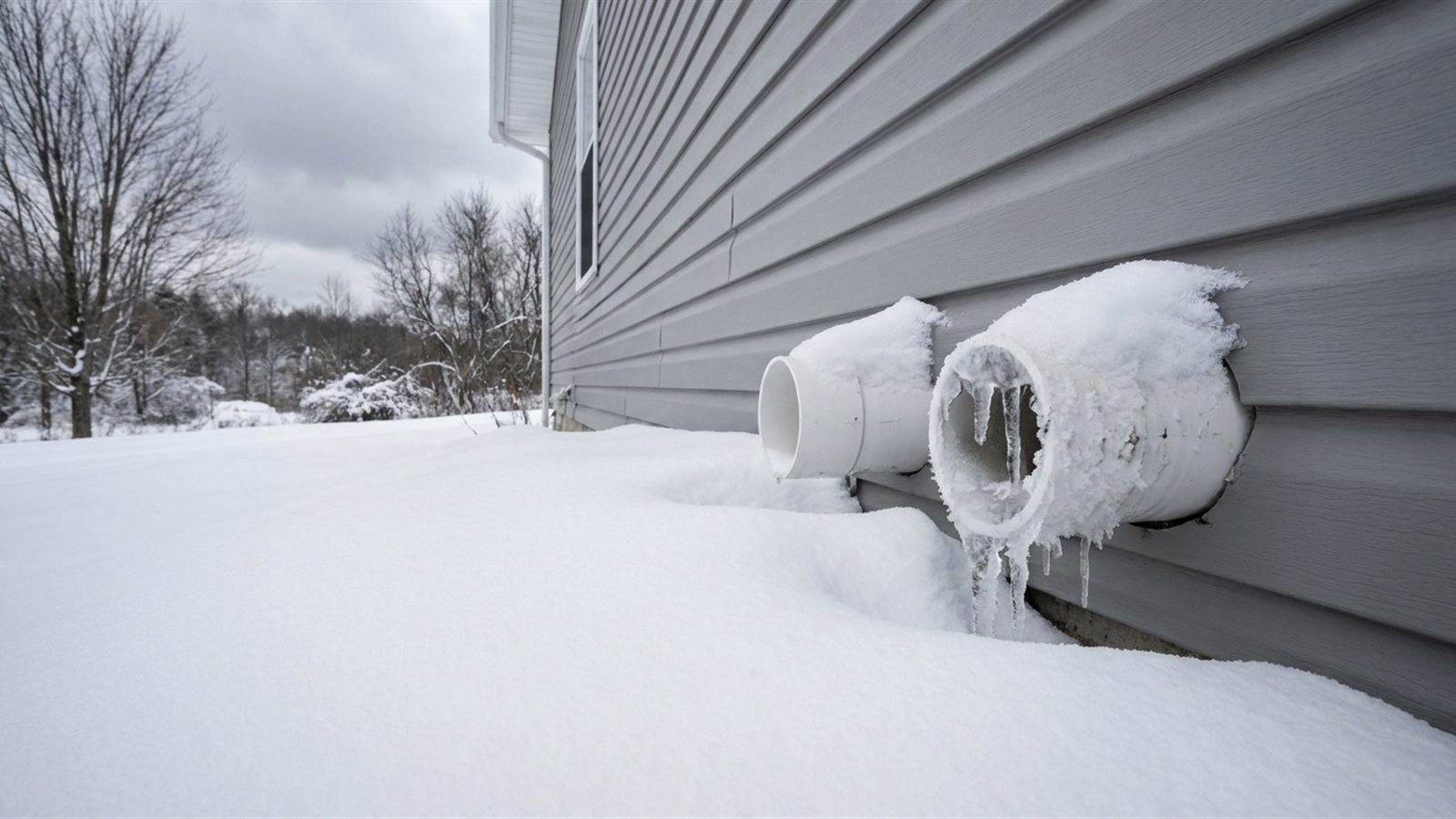
A high-efficiency furnace that keeps shutting off during heavy snow very often has a blocked intake or exhaust pipe. These furnaces draw combustion air through one PVC pipe and vent exhaust through another, both usually leaving the house through a side wall a foot or two above grade. Lake-effect snow can bury them within hours, and once the pipes are restricted, the pressure switch stops the furnace to prevent exhaust gases from backing up.
Frost is a related problem. The exhaust from a high-efficiency furnace carries a large amount of water vapor, and on very cold days it can freeze around the pipe opening and gradually close it off. The furnace then starts, the pressure switch fails to confirm a clear vent and the cycle ends, sometimes followed by a lockout. Clearing snow from both pipes by hand, and checking them after every significant snowfall, prevents most of these shutdowns.
The condensate drain is the other winter weak point. High-efficiency furnaces produce several gallons of water a day in cold weather, and that water drains through a trap and line, sometimes to a pump. If the trap is blocked or the line freezes where it runs through a garage or along an outside wall, the water backs up into the furnace and trips a safety switch. A furnace that shuts off repeatedly with water visible near its base, or a gurgling sound inside the cabinet, usually has a drain problem rather than a burner problem.
Homes in the snowbelt suburbs east of the city, where drifts build against side walls, are the most exposed, and a short check after each storm is the simplest prevention. Our HVAC service in Penfield and the surrounding towns includes checking the termination height on high-efficiency installs where drifts are a recurring issue.
When Is It Safe to Use the Furnace Reset Button?
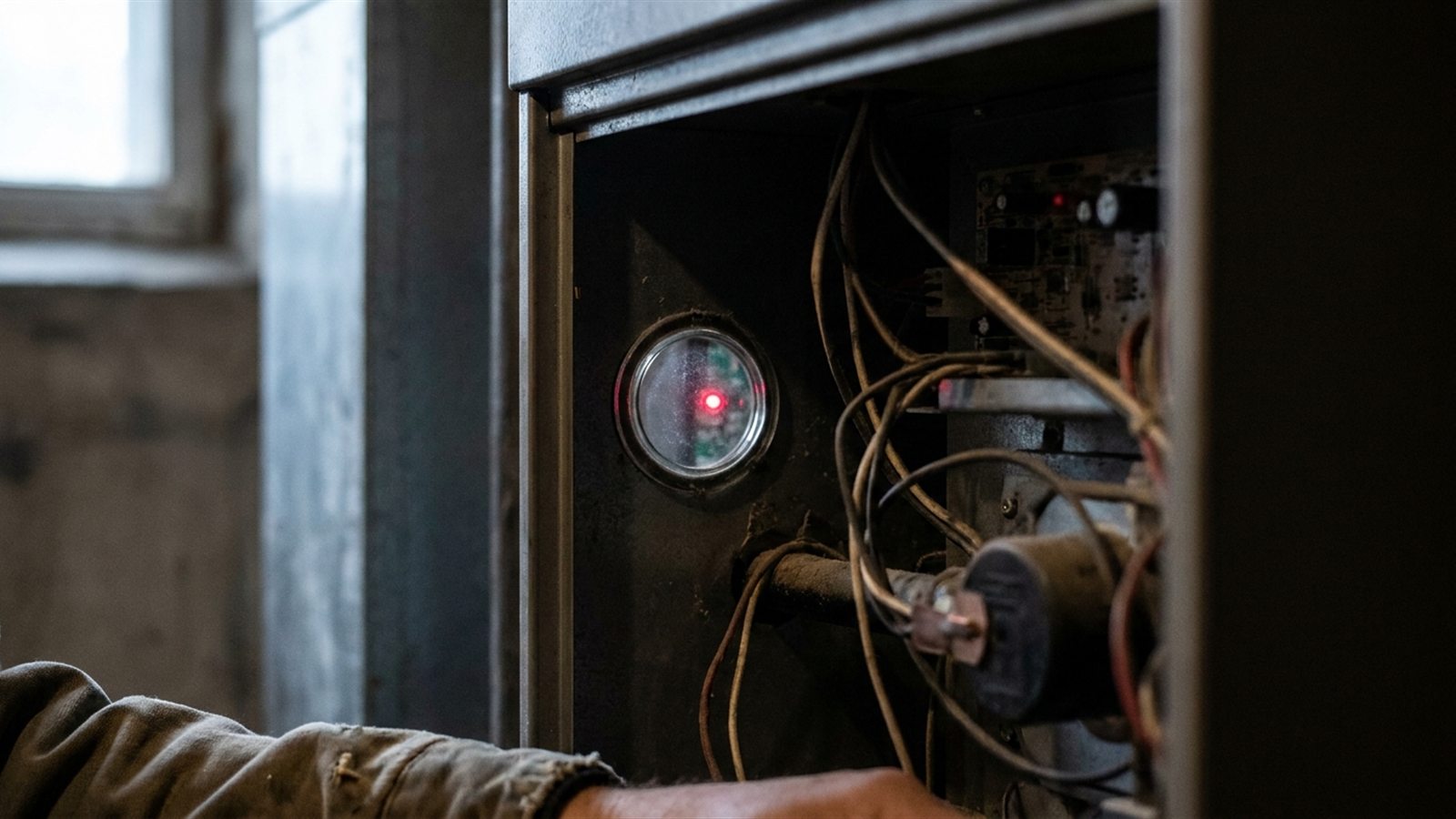
Most modern gas furnaces do not have a single reset button. The equivalent action is turning the power off at the service switch for about thirty seconds and back on, which clears a lockout on the control board. Some furnaces have a manual reset on the rollout switch near the burners, and oil furnaces have a red reset button on the burner control. Each of these exists to stop the furnace after a safety condition, which is why they need to be treated with care.
One reset after a power outage or a cleared vent blockage is reasonable. Repeated resets are not. A control board locks out after several failed ignition attempts because something is preventing a safe light-off, and resetting it does nothing to remove that cause. On an oil furnace, each press of the reset button sprays fuel into the combustion chamber, and repeated presses can flood it with unburned oil, creating a risk of a puff-back or fire when it finally lights.
Before pressing reset or cycling the power
- Record the status light pattern, since cycling the power erases it
- Check that the filter is clean and the outdoor vent pipes are clear
- Make sure there is no smell of gas or of burning
- Reset once only; if the furnace locks out again, leave it off and call
- On an oil furnace, never press the burner reset more than once
- Never reset a rollout switch that has tripped; it indicates flame escaping the burner area
The rollout switch point is worth emphasizing. A tripped rollout switch means flame has been detected outside the area where it should burn, which is commonly caused by a blocked heat exchanger or venting and occasionally by a cracked heat exchanger. Resetting it and restarting the furnace without an inspection is exactly the situation the switch was designed to prevent.
Furnace Still Blowing Cold Air After These Checks?
Tell us the status light code and what you are seeing, and we will book a technician with the right parts. Most cold-air faults are fixed on the first visit, with the price agreed before any work starts.
How Much Does It Cost to Fix a Furnace Blowing Cold Air in Rochester, NY?
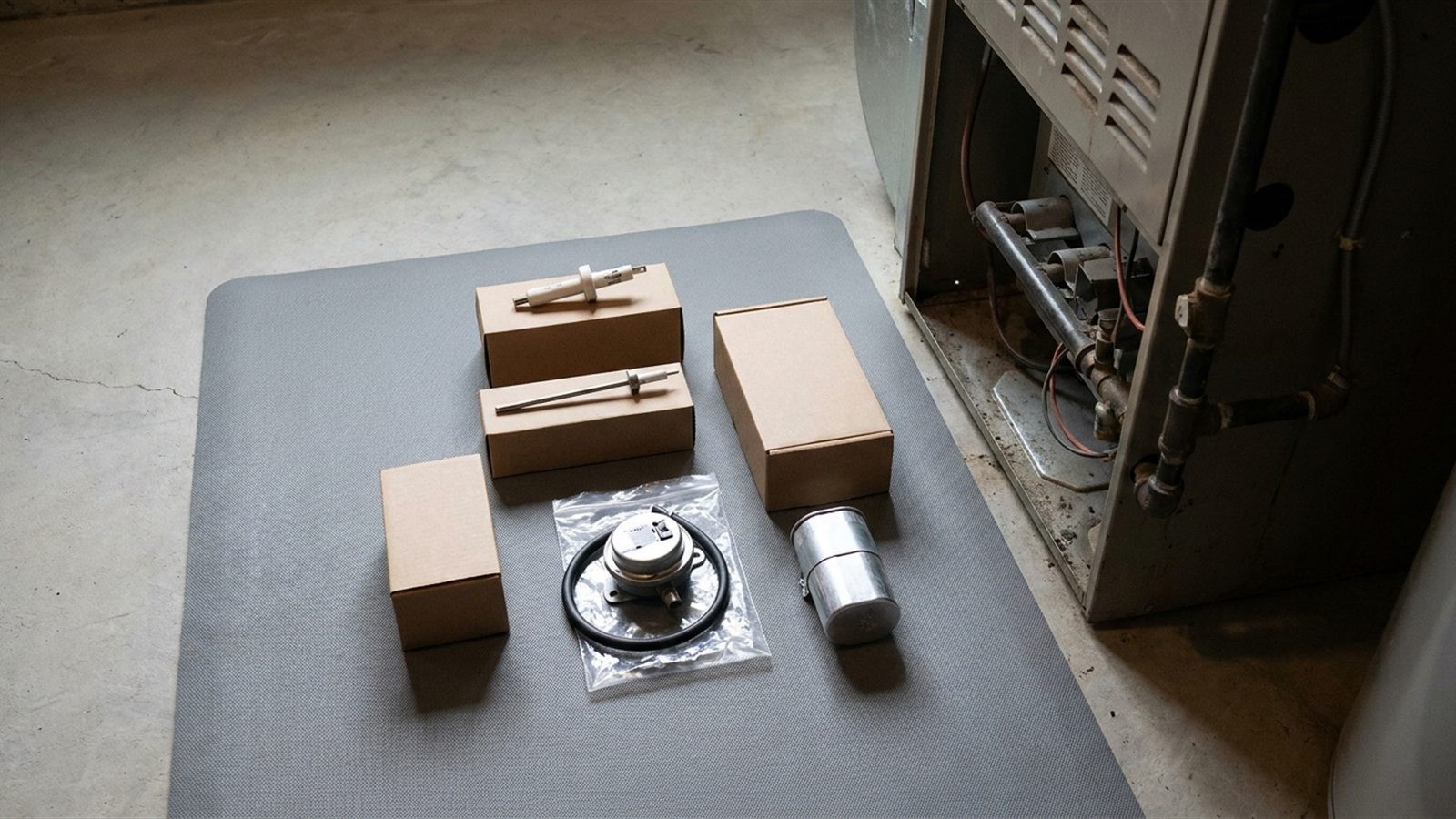
The cost to fix a furnace blowing cold air depends almost entirely on which component has failed, and most of the common causes fall at the lower end of the range. These figures are typical for the Rochester area and include the part and the labor to fit it. Every repair is priced and agreed before work begins.
| Repair | Typical Rochester cost | How common |
|---|---|---|
| Diagnostic visit, credited against the repair | $95 – $175 | Every call |
| Flame sensor cleaning or replacement | $100 – $250 | Very common |
| Hot surface ignitor replacement | $150 – $350 | Common |
| Pressure switch replacement | $150 – $400 | Common |
| Condensate trap and drain clearing | $100 – $250 | Common in winter |
| Draft inducer motor replacement | $400 – $900 | Occasional |
| Control board replacement | $350 – $800 | Occasional |
| Gas valve replacement | $350 – $750 | Uncommon |
Heat exchanger failure is the exception. A cracked heat exchanger on a furnace outside its warranty usually costs a large fraction of a new furnace to repair, and on a furnace that is already fifteen years old or more the sensible course is replacement. In that situation we set out both options with prices, and the cost of furnace replacement in Rochester is quoted in writing with no obligation.
A furnace blowing cold air on a cold night can make replacement feel like the obvious answer, and that is when homeowners are most likely to be sold a new system they do not need. Most of the faults in the table are single-part repairs on an otherwise healthy furnace. Where a contractor recommends replacement without identifying which component has failed and why it cannot be repaired, a second opinion is worthwhile.
When Does a Furnace Not Working Become an Emergency?
A furnace not working becomes urgent when there is a safety concern or a risk to the house itself. A gas smell, a carbon monoxide alarm or signs of scorching around the furnace call for immediate action before anything else. So does a complete loss of heat during a hard freeze, when indoor temperatures fall quickly and water pipes on outside walls become vulnerable.
Act immediately if any of these apply
- Smell of gas: leave the house, do not operate switches, and call RG&E or 911 from outside
- Carbon monoxide alarm sounding: get everyone outside and call 911
- Burning smell, smoke or scorch marks at the furnace: turn it off at the service switch
- No heat with outdoor temperatures well below freezing: call for emergency service
- Water leaking from the furnace onto electrical components or the floor
Carbon monoxide is the reason no furnace fault should be guessed at when combustion is involved. It is produced by incomplete burning, it has no color or smell, and the EPA’s indoor air quality guidance identifies faulty fuel-burning appliances as a leading household source. Working carbon monoxide detectors on every level of the home, and near sleeping areas, are the essential safeguard.
For the situations that cannot wait until morning, our 24/7 emergency heating service answers on the same number as the office. If the house is cold but the situation is stable, closing curtains, keeping interior doors open and opening cabinet doors under sinks on outside walls will slow the temperature loss until a technician arrives.
How Does Annual Maintenance Stop a Furnace Blowing Cold Air?
Most of the components behind a furnace blowing cold air wear gradually, and that gradual wear is measurable before it causes a breakdown. A flame sensor with a weakening signal, an ignitor drawing more current than it should, a slow condensate drain and a pressure switch close to its limit can all be identified during an inspection and dealt with while the furnace is still working.
That is the practical value of an annual furnace tune-up. The visit cleans the flame sensor and burners, tests the safety switches, clears the condensate system and checks the venting, which covers the majority of the causes of cold air, short cycling and winter shutdowns. The U.S. Department of Energy also points to regular maintenance as a key factor in keeping heating equipment efficient, so the same visit that prevents breakdowns helps the furnace use less gas.
Between visits, two habits make the biggest difference: changing the filter on schedule and clearing the outdoor vent pipes after snow. Together they prevent the overheating and venting faults that cause a large share of winter shutdowns, and neither takes more than a few minutes.
Who Should You Call When Your Furnace Is Not Working in Greater Rochester?
Dalton Heating & Cooling is a family-owned company based at 1556 Brace Rd in Victor, serving Rochester and the surrounding towns since 1989. Owner Darren still takes after-hours calls, and our technicians work on all major furnace brands, gas and oil, from standing-pilot furnaces in older homes to current high-efficiency models. The office number, 585-425-8116, also reaches the emergency line outside business hours.
Our service area covers Victor, Pittsford, Penfield, Henrietta, Honeoye Falls, Canandaigua, Brighton, Webster, Spencerport, Brockport and East Rochester. Fairport is one of our busiest towns for winter heating calls, and our Fairport HVAC contractor page covers the furnace repair and replacement work we carry out there, from village homes near the canal to newer subdivisions.
When you call, it helps to have the furnace brand, its approximate age, the status light code and a short description of what the furnace does when heat is called. With that information we can often advise on a simple fix over the phone, and where a visit is needed, the technician arrives prepared for the most likely cause.
See Recent Furnace Repair and Heating Work From Dalton Across Rochester.
These photographs are from Dalton heating jobs in and around Rochester, including furnace installations, a thermostat fitted by our team and outdoor equipment for homes running dual heating systems. Each of these systems is serviced by the same team that installed it. That continuity means a technician responding to a no-heat call already knows the equipment and its history.
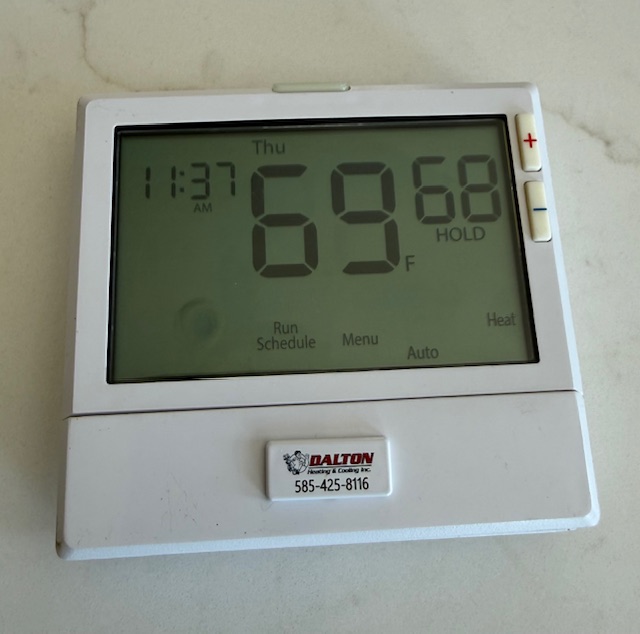

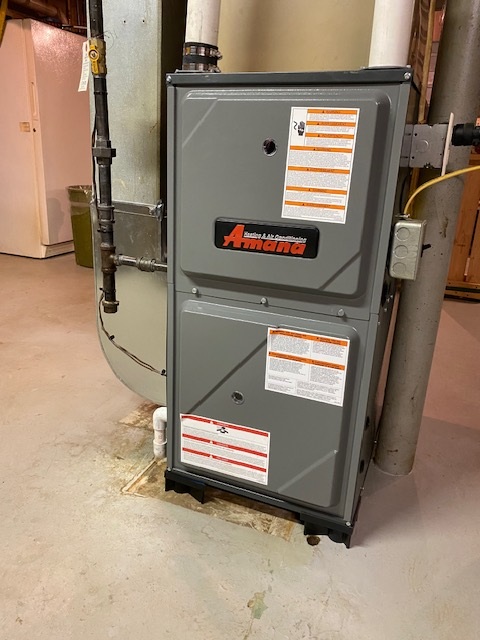

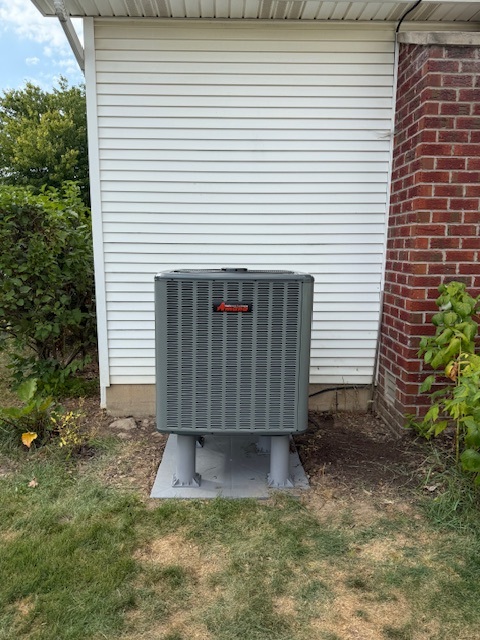

If your furnace is blowing cold air or not turning on, one phone call is enough to start. We will ask a few questions, give any advice that can safely be followed in the meantime and book the earliest technician visit that suits you.
Is Your Furnace Not Working Tonight?
Heat out on a cold night? We answer 24/7 across Greater Rochester. Most cold-air and no-start faults are single-part repairs, priced before any work begins.
Family-owned Rochester HVAC since 1989, free over the phone, free in-home proposals, no upsell.
What Else Do Homeowners Ask About a Furnace Blowing Cold Air?
Why Is My Furnace Blowing Cold Air?
The blower is running but the burners are not producing heat. The most common causes are a thermostat fan set to ON instead of AUTO, a clogged filter causing the furnace to overheat, a dirty flame sensor, a failed ignitor, or a blocked vent or condensate drain on a high-efficiency furnace.
Where Is The Reset Button On A Furnace?
Most modern gas furnaces have no single reset button; turning the power off at the service switch for about thirty seconds resets the control board. Oil furnaces have a red reset button on the burner control. Reset once only, and call for service if the furnace locks out again.
Why Is My Furnace Not Turning On?
If nothing happens at all, check the thermostat batteries and mode, the furnace service switch, the breaker and that the blower door is closed. If the furnace starts but stops partway through its sequence, the ignitor, pressure switch, flame sensor or venting is the likely cause and a technician should diagnose it.
Why Is My Furnace Short Cycling?
The most common causes are overheating from a restricted filter or closed registers, a weak flame sensor signal, a poorly located thermostat, an oversized furnace or a venting and pressure switch fault. Cycles of three to five minutes that repeat several times an hour indicate short cycling.
Is Furnace Short Cycling Dangerous?
Usually not immediately, but it shortens equipment life and raises gas use. Short cycling caused by overheating should be investigated promptly, because repeated high-limit trips mean the heat exchanger is running hotter than designed.
What Should I Do If My Furnace Is Blowing Cold Air?
Check that the thermostat is on HEAT with the fan on AUTO, replace the filter if it is dirty, confirm the furnace switch and breaker are on, and clear snow from outdoor vent pipes. If the furnace still blows cold air, note the status light code, turn the system off and call a technician.